
Affiliate Disclosure: “Support our blog! This post may contain Affiliate Links, meaning we receive a small commission if you buy through them, at zero extra cost to you.”
If your body feels a bit stiff, heavy, or tight upon waking up, it isn’t necessary to start your day with an intense workout. A gentle 7-Day Morning Mobility Reset can be a great way to gradually prepare your body for movement.
Mobility isn’t just about flexibility. It involves moving your joints comfortably within their available range, maintaining body control, and making everyday movements more comfortable.
According to Harvard Health, gentle stretching and flowing movements can support flexibility, balance, and mobility.
This “7-Day Morning Mobility Reset” includes seven simple movements that beginners can perform according to their comfort level. The goal of this routine is not to perform difficult yoga poses, but rather to gently wake up the body in the morning.
If any movement causes sharp pain, dizziness, or unusual discomfort, you should stop doing it. Yoga is generally considered safe for healthy individuals when practiced correctly, though injuries can still occur.
What Is the 7-Day Morning Mobility Reset

The “7-Day Morning Mobility Reset” is a simple seven-day movement plan that focuses on a beginner-friendly mobility or yoga-inspired movement each day.
Its biggest advantage is that you don’t need to commit to a long workout session. You can simply set aside a few minutes to incorporate gentle movement into your morning routine.
Morning stretching and mobility work can be particularly beneficial for those who sit for long periods or experience stiffness upon waking up.
Harvard Health notes that stretching can help improve joint range of motion and flexibility, as well as alleviate muscle stiffness. This routine is not a treatment for any specific medical condition. It is best viewed as a general wellness habit.
Why Morning Mobility Matters

Our bodies can feel a bit stiff after remaining in the same position for a long time. Performing some controlled movements in the morning allows you to start your day more actively. Mobility and flexibility are interconnected, yet they are not exactly the same.
Flexibility primarily relates to the lengthening capacity of muscles and soft tissues, whereas mobility encompasses joint movement, flexibility, and control.
That is why the ‘7-Day Morning Mobility Reset’ incorporates flowing and controlled movements instead of just static stretching. The goal of a good mobility routine is not to stretch the body forcefully, but to practice comfortable movement.
Day 1 Cat-Cow Flow, Gently move your spine.
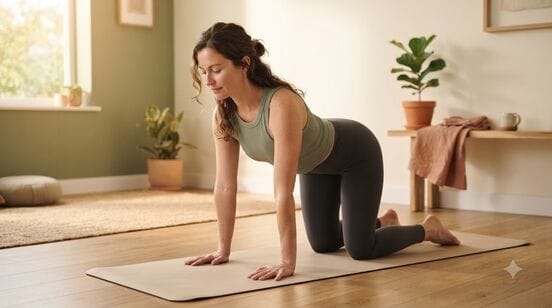
Start the first day with the Cat-Cow flow. This movement is beginner-friendly and allows the spine to move through gentle flexion and extension.
Place your hands and knees on the mat. Then, gently round your back, followed by opening your chest slightly forward within a comfortable range.
Keep the movement slow, coordinating it with your breathing, and do not force any position. You can perform this at a comfortable pace for about two minutes.
The goal is not to “open up” the spine in a dramatic way, but rather to practice controlled movement. This can be an easy starting point for morning mobility.
Day 2 Thread the Needle, For Shoulders and Upper Back

Perform the “Thread the Needle” movement on the second day. This movement offers a gentle rotation and stretch for the upper back and shoulder area. Start on your hands and knees.
Gently slide one arm underneath the other and rotate as far as feels comfortable.
Then, slowly return to the starting position and repeat on the other side. A simple option is to spend about one minute on each side.
In the “7-Day Morning Mobility Reset,” this movement can be particularly useful for those who have to sit at a desk or in front of a laptop for long periods. However, do not force your body to deepen the stretch.
Table of Contents
Day 3 Low Lunge, Give your hips some gentle movement.
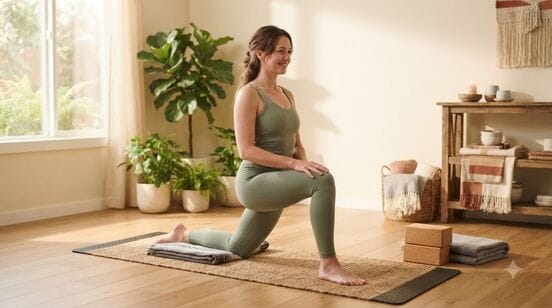
Incorporate the Low Lunge into your routine on the third day. This position can provide a gentle stretch around the hips and the front leg.
Step one foot forward and gently rest the other knee on the mat. Keep your body upright and allow your hips to move forward only as far as is comfortable.
If balancing is difficult, you can place your hands on the floor, yoga blocks, or a stable support. A gentle practice of about 1–2 minutes on each side is sufficient.
The goal of this movement is not to rapidly increase flexibility. The aim is to move the hips within a controlled and comfortable range.
Day 4 Side Body Stretch, Lengthen the sides of your body.

Perform the side body stretch on the fourth day. Sit upright or in a comfortable seated position, raise one arm, and gently lean your torso toward the opposite side.
This movement creates a stretching sensation along the side of the body. Try to keep your shoulder relaxed rather than pulling it up toward your ear. You can start by holding the stretch for about one minute on each side. Maintain normal breathing while performing this movement.
Stretching guidelines from Harvard Health also suggest taking the stretch to the point of resistance, without forcing it to the point of pain or discomfort.
Day 5 Pigeon Pose, Gentle Option for Tight Hips

The Pigeon Pose is included on the fifth day. This can be a deeper, hip-focused yoga pose, so beginners should modify it according to their comfort level. If the full Pigeon Pose feels uncomfortable, there is no need to force it. You can opt for a gentle seated hip stretch instead.
Holding the position for about 1–2 minutes while breathing deeply and calmly is sufficient. This should not be a race to achieve flexibility. If you experience pain in the knee, hip, or lower back, stop the pose and choose an appropriate modification.
According to the NCCIH, yoga poses may need to be modified in cases of certain health conditions, previous injuries, or pregnancy.
Day 6 Happy Baby, Relax the lower body.

Practice the Happy Baby Pose on the sixth day. Lie on your back, gently bring your knees toward your chest, and hold your feet or thighs in a comfortable position. This pose can provide gentle movement and relaxation around the hips and lower back.
You do not need to force your knees toward the floor. If the full pose is uncomfortable, you can simply bring your knees toward your chest and rock gently. A relaxed practice of about 2 minutes is sufficient.
This part of the 7-Day Morning Mobility Reset focuses specifically on slow breathing and relaxed movement.
Remember, comfort and control are more important in mobility practice than achieving the perfect shape of a pose.
Day 7 Seated Forward Fold, Finish the week with a calming stretch.
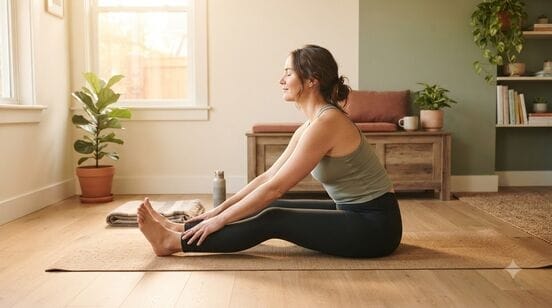
Conclude the routine on the seventh day with the Seated Forward Fold. Extend your legs comfortably in front of you and slowly lean forward from the hips. It is not necessary to hold your toes.
Stop wherever you can reach comfortably. If your hamstrings feel very tight, it is perfectly fine to bend your knees slightly. You can hold this position for about two minutes while breathing slowly.
There is no need to force your back to round or pull your body down while performing the forward fold. The aim of this final movement is to provide a calm finish, not to test your flexibility.
7-Day Morning Mobility Reset, Complete Routine Table
The entire routine can be viewed in a simple table below. This will help you quickly understand the daily movements, approximate duration, and main focus.
| Day | Movement | Suggested Time | Main Focus |
|---|---|---|---|
| Day 1 | Cat–Cow Flow | 2 minutes | Spine mobility |
| Day 2 | Thread the Needle | 2 minutes | Upper back and shoulders |
| Day 3 | Low Lunge | 2 minutes | Hip movement |
| Day 4 | Side Body Stretch | 2 minutes | Side body and posture |
| Day 5 | Pigeon Pose | 2 minutes each side | Hip flexibility |
| Day 6 | Happy Baby | 2 minutes | Hips and lower body |
| Day 7 | Seated Forward Fold | 2 minutes | Hamstrings and back |
This timing is a practical starting point, not a fixed medical prescription. If your body feels particularly stiff on any given day, you can reduce the duration and keep the movements gentler.
What could be the benefits of this routine?
The most practical benefit of the 7-Day Morning Mobility Reset is that it can help you build a daily habit of movement. You do not need to set aside 30–60 minutes in the morning for mobility work.
Even just a few minutes of consistent practice can cultivate the habit of paying attention to your body’s movement. Regular stretching can support flexibility and range of motion, while movements like yoga can contribute to balance and overall physical function.
The potential benefits of this routine include:
- Initiating gentle movement after the usual morning stiffness.
- Supporting flexibility and range of motion.
- Focusing on commonly tight areas such as the hips, shoulders, and spine.
- Improving body awareness and movement control.
- Starting the day with a calming wellness habit.
- Encouraging movement breaks within a sedentary lifestyle.
However, these benefits should not be viewed as guaranteed results. Every individual’s flexibility, fitness level, age, and physical condition differ.
How to Do It Safely
Making a morning mobility routine safe is more important than making it effective. You should not adopt a competitive mindset when performing any pose.
Mild tension during stretching can be normal, but sharp pain or persistent discomfort should not be ignored. Harvard Health also advises performing stretches within a pain-free range and avoiding the use of excessive force.
Follow these simple tips:
- Start at a slow pace.
- Move only within a comfortable range of motion.
- Keep your breathing natural.
- Stop the movement if you experience pain.
- Use a yoga block or stable support if needed.
- Beginners should not force difficult poses.
- Do not put excessive strain on your body solely to increase flexibility.
- Seek guidance from a qualified professional if you have an existing injury or medical condition.
According to the NCCIH, beginners should avoid advanced practices such as headstands, shoulder stands, and forceful breathing.
Who is this routine for?
The “7-Day Morning Mobility Reset” can serve as a gentle starting framework for beginners. If you are new to yoga, you do not need to have perfect flexibility.
Whether you are starting with a stiff body or one that is already flexible, the movements can be adjusted to suit your level. This routine may particularly appeal to those looking for a short morning movement practice.
This can also be convenient for those who work out at home and want to incorporate some mobility exercises into their day.
However, one should not blindly follow the routine in cases of pregnancy, significant joint problems, recent injury, balance issues, or any medical condition.
In such cases, it is better to seek personalized guidance from a healthcare professional or a qualified yoga instructor.
How to Make the Routine a Habit
The success of any wellness routine does not depend solely on the choice of exercises. Consistency is far more important.
To make your “7-Day Morning Mobility Reset” sustainable, anchor it to an existing morning habit. For instance, you could do it after waking up, after washing your face, or before breakfast.
Keep your yoga mat in a spot where it is easily visible. During the first week, focus on regular practice rather than perfect form. If you cannot complete the full routine on a given day, even just 2–3 minutes of gentle movement is a practical option.
Harvard Health also emphasizes the importance of regular and consistent practice for flexibility and yoga routines.
Common Mistakes to Avoid
The most common mistake is believing that stretching more deeply makes it more effective. However, mobility is not about pushing the body beyond its limits. The second mistake is holding one’s breath.
Slow, natural breathing helps keep the movement relaxed. The third mistake is maintaining the same intensity every day.
If the body is tired or unusually stiff, it is more sensible to keep the movements smaller and gentler.
The fourth mistake is ignoring pain. Injuries can occur in yoga, so proper technique, gradual progress, and appropriate modifications are important.
What to Expect After 7 Days

It is unrealistic to expect a dramatic transformation after just one week.
It is better to view the “7-Day Morning Mobility Reset” as a starting point rather than a quick-fix challenge. Your primary goal over these seven days should be to establish a habit of regular movement.
Some people may feel more comfortable or less stiff after the routine, though experiences vary from person to person. If you enjoy the routine, you can continue to incorporate it into your weekly fitness regimen even after the seven days are up.
Harvard Health’s 2026 guidance on flexibility training recommends regularly performing exercises that target major muscle-tendon groups. Therefore, consider this seven-day plan not as a finish line, but as the beginning of a healthy movement habit.
Final Thoughts, What did we learn from this 7-Day Reset?
A healthy morning routine doesn’t always have to involve intense workouts, sweating, or long exercise sessions. Sometimes, a great start to the day can simply come from slow, controlled movements.
The ‘7-Day Morning Mobility Reset’ is based on this simple idea. Begin by mobilizing your spine with the Cat-Cow flow, focus on your upper back with ‘Thread the Needle,’ and gently mobilize your hips with a Low Lunge.
Then, round out the week with the Side Body Stretch, Pigeon Pose, Happy Baby, and Seated Forward Fold. The most important thing is to listen to your body’s signals. It isn’t necessary for a pose to look perfect.
Comfortable movement, gradual progress, and consistency are far more valuable. If you enjoy this routine, you can make it a part of your regular morning wellness habit after the seven days are up.
Frequently Asked Questions
1. Is the 7-Day Morning Mobility Reset suitable for beginners
Ans – Yes, this routine is based on beginner-friendly movements. However, beginners should practice only within their comfortable range and avoid forcing difficult poses. The NCCIH advises beginners to avoid advanced yoga practices and to seek guidance from a qualified instructor if necessary.
2. How long does the 7-Day Morning Mobility Reset take
Ans – In this version, a simple target of approximately two minutes has been set for each daily movement. Therefore, it can easily be scheduled as a short morning routine. You can adjust the duration according to your needs.
3. Can I do this routine every morning
Ans – Gentle mobility and stretching exercises can be incorporated into your regular routine. However, the intensity and specific movements depend on your individual needs. If you experience pain or unusual discomfort after any movement, you should stop doing it.
4. Does this routine help with weight loss
Ans – A mere seven-minute mobility routine should not be considered a weight-loss program. Weight management is generally influenced by several factors, such as overall diet, physical activity, sleep, and lifestyle habits. It is more realistic to view this routine as a general movement and wellness habit.
5. Can I do these exercises without a yoga mat
Ans – A yoga mat is not essential, but a comfortable, non-slip surface can be helpful for certain floor-based movements. Exercise extra caution if the surface is hard or slippery. A folded towel or a suitable exercise surface can be used for support.